
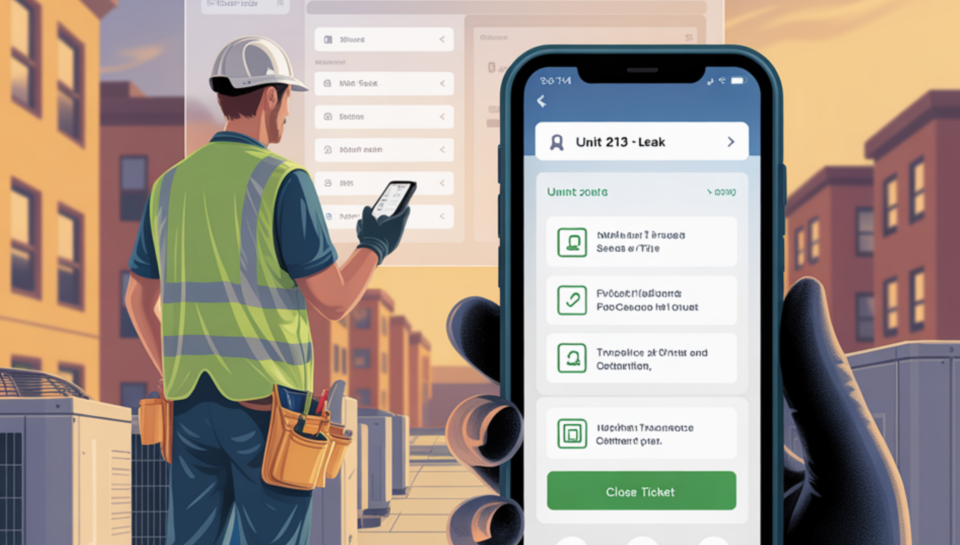
Digital service requests, sensor alerts, and AI dispatch engines promise faster repairs and tighter budgets—but only if the tools fit the everyday reality of the technicians who keep a property running. When software hides key functions four taps deep, demands a Wi-Fi reconnection before a leak can be documented, or forces duplicate data entry, adoption stalls. Residents wait, response times stretch, and the forecast lift to NOI never arrives.
The fix is to treat technology selection the way a seasoned tech approaches a boiler outage: start with what the user needs. Give the crew a demo phone and ask them to close a mock service request. If it takes more than one thumb or one minute, the tool isn’t ready. Field input uncovers high-impact tweaks—offline photo capture for dead-zone basements, large icons for gloved hands, bilingual toggles for diverse teams—that a boardroom pilot would miss.
Simplicity has to carry into design. A service-request screen should show only what matters: unit number, resident note, task steps. Everything else belongs in expandable tabs. Mobile-first coding is non-negotiable; nearly 67 percent of field-service organizations now run fully integrated mobile solutions, up 41 percent since 2020. Repairs happen on rooftops, not desktops, and apps that cache data offline prevent double typing when coverage drops.
Integration is where value locks in. A completed ticket should ripple across the stack—inventory deducts one capacitor, the resident portal posts a “job finished” photo, the KPI dashboard updates, and the ledger captures labor cost—without extra clicks. Companies that link dispatch AI with inventory and resident messaging report 30 percent faster average response times and 20 percent more daily job closures.
Training protects the investment. A single webinar won’t cut it. Technicians prefer short, task-specific micro-videos—how to upload a before-and-after image, where to log refrigerant use—delivered inside the app. That approach meets field reality: 80 percent of technicians say mobile learning would boost their efficiency. Early adopters can serve as “shop champions,” answering peer questions and flagging hiccups before they derail momentum.
Good tech should feel like a favorite wrench: dependable, intuitive, built for the job at hand. When software removes friction rather than adding it, first-visit fix rates rise—AI-guided scheduling has cut repair times by up to 39 percent in recent deployments—data accuracy climbs, and technicians end each shift satisfied instead of screen-frustrated. The next time you evaluate a platform, ask one question: does it make a busy service pro’s day easier? If the answer is yes, the boost to NOI will follow.