
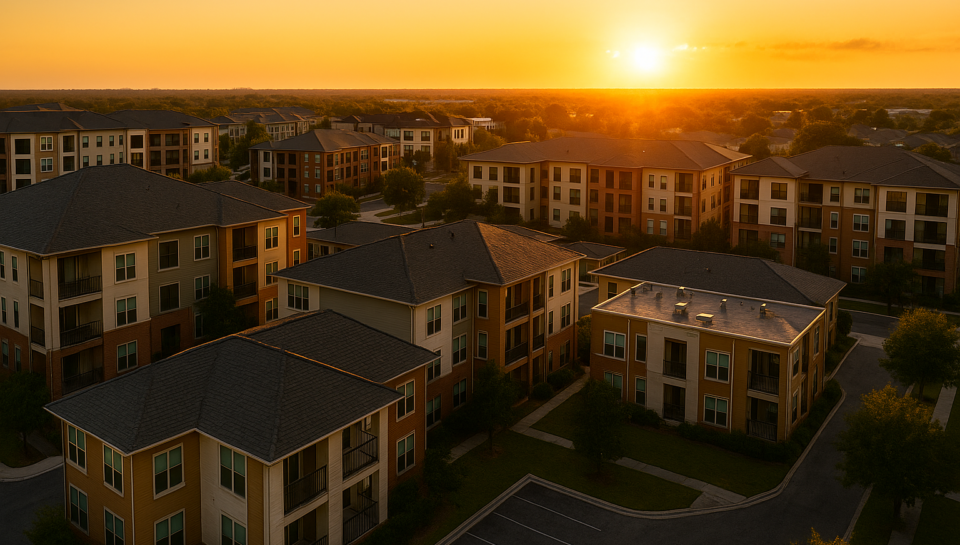
In multifamily real estate, the roof is often overlooked—until it becomes an emergency. Operators spend millions on interior finishes, leasing incentives, and access control, while one of the most expensive, failure-prone systems sits overhead, largely ignored. Yet nothing erodes asset value—or NOI—faster than unmanaged roof risk. Leaders like Melvyn Scofield are working to change that.
Scofield, who immigrated from Brazil and began his U.S. career washing dishes, rose through hands-on work to become a sought-after roofing project manager. Today, he’s one of the most practical, visible educators on LinkedIn, demystifying roof care for owners, operators, and site teams. His message is straightforward: you don’t need to be an expert to manage a roof—you just need to care enough to learn the basics. In an environment of rising capital costs and mounting climate pressure, that mindset isn’t just helpful—it’s strategic.
The data supports him. Shingles once sold as “30-year” products now regularly fail in 12 to 15. According to the National Roofing Contractors Association, premature failure is accelerating due to UV exposure, ventilation issues, and inconsistent install quality. Scofield often cites his own roof—barely a decade old and already declining—as an example of what owners across the country are facing. And while one worn roof is a problem, a portfolio of them—aged in parallel—is a capital time bomb.
Roof failures rarely arrive with fanfare. They start small—a popped nail, a missing shingle, a clogged drain—and then spread quietly. Moisture seeps in, insulation sags, decking rots. Before long, what might have been a minor repair becomes a five-figure remediation. Many operators budget for HVAC or repainting cycles but completely miss roofing timelines. That oversight comes at a steep cost. A larger owner can easily face $500,000 to $1 million in roof-related spend in just a few years if replacements stack up.
Scofield offers a pragmatic response: create a Roof Savings Account. Allocate six cents per square foot per month and treat it like any other recurring line item. It’s not theoretical. Over a decade, that accrues more than $43,000 on a 60,000-square-foot roof—enough to cushion a full reroof or fund major repairs without emergency draws. More importantly, it demonstrates discipline. Insurers and lenders increasingly reward owners who track inspections, document maintenance, and build dedicated reserves. In a capital market where perceived risk affects pricing, this kind of operational foresight matters.
Inspections, too, are underutilized. Scofield recommends a simple rhythm: one visit after winter, another after storm season. Industry groups like the International Association of Certified Home Inspectors back this cadence, noting that seasonal extremes often reveal hidden weaknesses. These walkthroughs are fast, inexpensive, and often bundled by the original roofing contractor. But their real value lies in early detection. A clear photo report builds history. A caught problem avoids catastrophe. And when budget season comes around, nothing beats data when making the case for timing or funding.
Technology is about to reshape this landscape even further. At a recent international expo, Scofield watched autonomous robots nail shingles in real time. This isn’t a distant dream. He estimates full-scale adoption within three to five years, not ten. Once the first contractors deploy them at scale, others will be forced to follow. Labor costs drop. Job times compress. Risk and injury decline. For large-scale multifamily jobs, that means faster turnovers, fewer claims, and potentially lower premiums. Operators who understand this shift early will be better positioned to negotiate pricing and timelines as the tech becomes mainstream.
Still, robots won’t replace responsibility. Technology may automate the labor—but strategy still lives with ownership. The real shift happens when operators stop treating the roof as just another repair line and start treating it as a high-value system. That means logging installation dates, tracking materials, storing photos, and reviewing roof status during every annual budget cycle. It means teaching site teams to spot early issues—not just react to emergencies. It means building systems that last longer because they’re actually managed.
Melvyn Scofield isn’t pushing a product. He’s building a perspective. His content is unpolished but authentic—daily videos, quick tips, open DMs. He treats LinkedIn like a job site whiteboard: a space to educate, not pitch. His belief is simple, and powerful: knowledge grows when it’s shared. The more we elevate understanding at the property level, the fewer emergencies we create at the ownership level.
Roofs don’t fail overnight. They fail slowly—then suddenly. The owners who understand this, and who plan accordingly, aren’t just avoiding costs. They’re gaining advantage. Because in multifamily, the best way to protect what’s under the roof… is to finally take what’s on top seriously.